Westwater Resources files key environmental permit for Coosa Graphite Project
PROTECTED CONTENT
If you’re a current subscriber, log in below. If you would like to subscribe, please click the subscribe tab above.
Username and Password Help
Please enter your email and we will send you a password reset link.
Coosa Riverkeeper expresses concerns
By Christa Jennings
Senior Staff Writer
On Monday; following years of work, processes and procedures; Westwater Resources announced that it has filed an application for a National Pollutant Discharge Elimination, or NPDES, permit with the Alabama Department of Environmental Management for its Coosa Graphite Project in the Weogufka area of Coosa County.
Required under the U.S. Clean Water Act, the NPDES permit authorizes the regulated discharge of treated stormwater and other permitted water associated with mining and related site activities.
Westwater Resources has stated that the application filing represents “an important step in the environmental permitting process for the Coosa Graphite Project.”
The submitted application includes site-specific engineering, hydrologic and environmental analyses to “support compliance with applicable federal and state water quality standards.”
Now that the permit application has been filed, ADEM will review the application in accordance with its regulatory procedures, which include technical evaluation and a public notice and comment period.
“We continue to advance the Coosa Graphite Project in a disciplined and responsible manner,” said Frank Bakker, chief executive officer of Westwater Resources, in a press release. “Filing the NPDES permit application reflects the progress of our engineering and environmental work and supports our long-term plan to integrate Coosa as the primary source of natural graphite feedstock for our Kellyton Graphite Plant. Vertical integration remains central to our strategy as we build a domestic supply chain for battery-grade graphite.”
Westwater has stated that it will continue to work with ADEM and other regulatory authorities as the permitting process moves forward.
Westwater Resources acquired the mineral rights to the Coosa Graphite Project in the northwestern area of Coosa County in 2012. However, work did not begin at the Kellyton Graphite Processing Plant until 2022.
While Westwater celebrates this next step in its process, Coosa Riverkeeper has expressed concerns with the graphite mine threatening the Coosa River.
Following Westwater’s announcement regarding the permit application, the Coosa Riverkeeper organization provided an update regarding the permitting for the proposed graphite mine.
Westwater’s production facility is slated to produce “a critical component” for battery anode manufacturing, including those used for electric vehicles. The company owns approximately 42,000 acres of mineral rights in Coosa County.
Coosa Riverkeeper stated that graphite is a critical mineral currently mined overseas because it is found in such a limited number of locations in the United States.
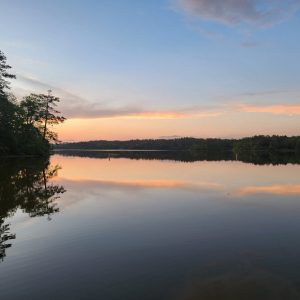
One of the few places graphite can be found in the United States is within the Coosa River basin, situated between Weogufka and Hatchet creeks, upstream from Lake Mitchell on the Coosa River.
The Coosa Riverkeeper team reports that the area is critical habitat for more than a dozen threatened and endangered species and that it is also widely used for recreation ranging from bass tournaments to swimming and canoeing.
Coosa Riverkeeper’s concerns include potential pollution into surrounding waterbodies, impacts to threatened and endangered species, light pollution, noise pollution, negative impacts to roadways, and negative impacts to the quality of life.
“Our organization has anticipated this moment for years, building relationships in the community that this proposed mine will impact and collecting baseline water quality data,” Coosa Riverkeeper stated in a release. “Rivers have a head and a mouth, but they don’t have a voice to speak for themselves. Too often, a lack of adequate resources or political will causes government agencies tasked with administering permits and enforcing our environmental laws to fail to issue protective permits and take enforcement actions.”
Coosa Riverkeeper has stated that once Westwater’s permit is issued, the organization will announce how individuals can voice their concerns regarding the mining operation’s impact on the woods, water, quality of life, and more.
The organization said that it “supports sustainable economic development, but not at the cost of public health and water quality.” Coosa Riverkeeper’s stated mission is “to protect, restore and promote the Coosa River and its tributaries in Alabama.”