Public comments sought regarding Westwater’s permit application
PROTECTED CONTENT
If you’re a current subscriber, log in below. If you would like to subscribe, please click the subscribe tab above.
Username and Password Help
Please enter your email and we will send you a password reset link.
Coosa Riverkeeper holding public community meeting Monday morning
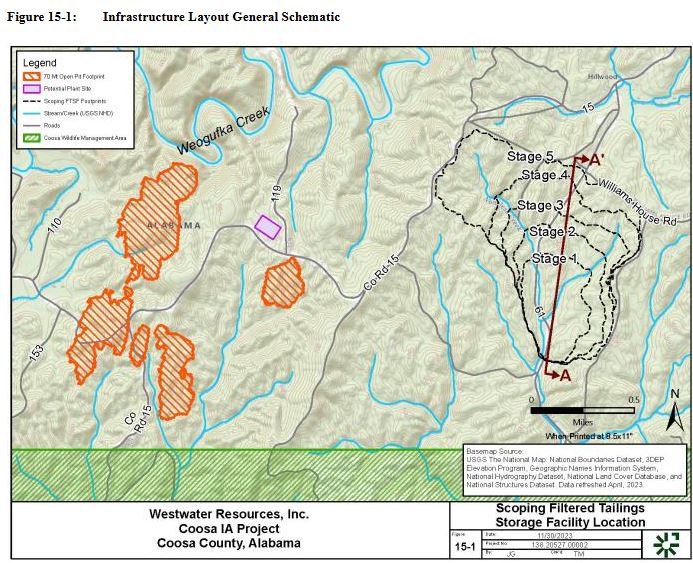
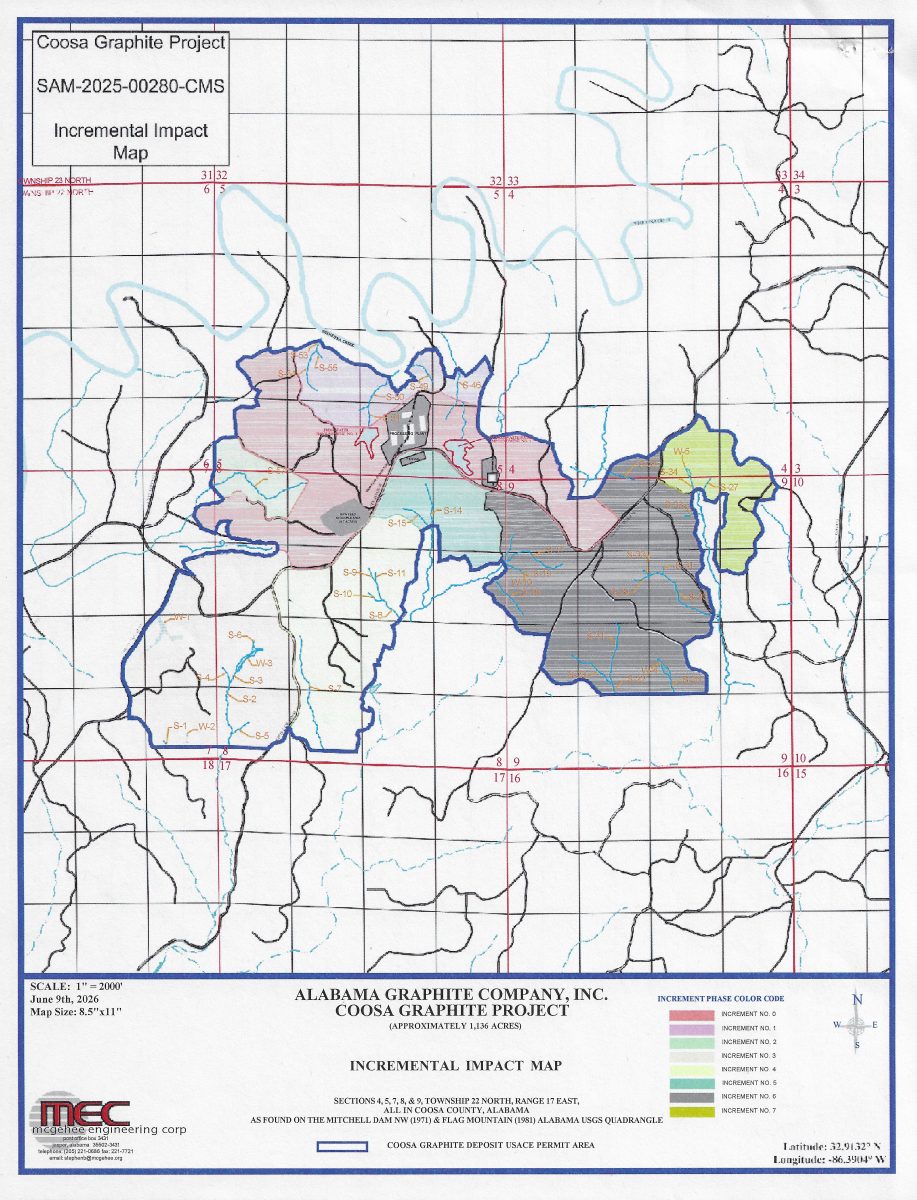
Map – open pits: This map, located in documentation on the U.S. Securities and Exchange Commission (SEC) site, indicates the open pit footprints and the proposed location of a filtered tailings storage facility. According to the SEC documentation, “Slurried tailings will be pumped from the plant to a filter plant near the FTSF. After filtration, the filtered tailings will either be trucked or conveyed to the FTSF and compacted in place. The FTSF will be a comingled facility in which filtered tailings will be comingled with waste rock.”
By Christa Jennings
Senior Staff Writer
After more than a decade in the works, Westwater Resources has now reached the stage of applying for permits for the Coosa Graphite Project mine, and public comments are now being sought through July 26.
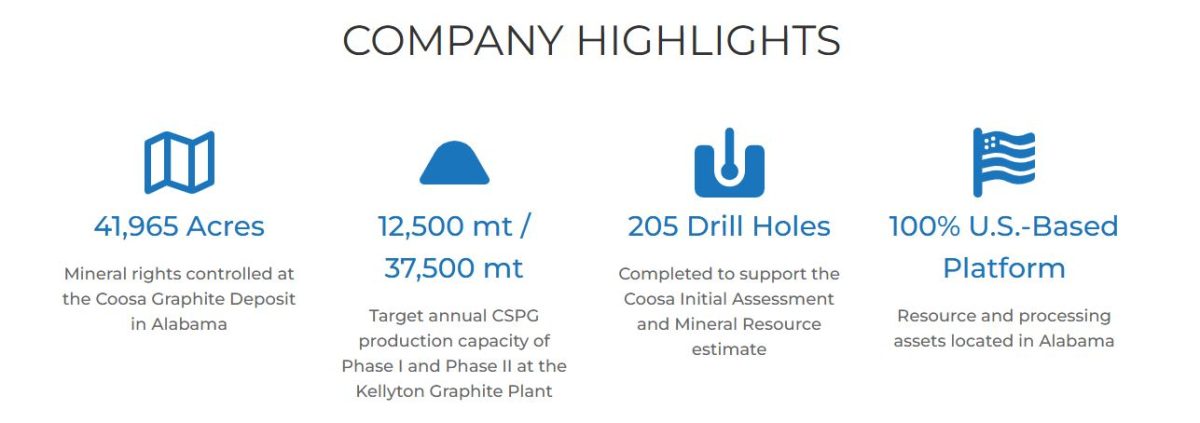
The Coosa Graphite Project was first discussed with county representatives in 2012, then being overseen by Alabama Graphite Company. Alabama Graphite Corp. initially explored and secured long-term mineral leases for the Coosa Graphite Deposit, which covers 41,965 acres of mineral rights.
At that time, Alabama Graphite made the project its flagship and hoped to become the first company to mine and produce graphite in the United States in more than 60 years. The site for the project is located approximately four-and-a-half miles into the Wildlife Management Area near the Hillwood community.
In November 2012, representatives with Alabama Graphite Company met with then county representatives; including Judge of Probate Terry Mitchell, District 4 County Commissioner Paul Perrett, Circuit Clerk Jeff Wood, and Sheriff Terry Wilson; to discuss the proposed project after the company’s initial drilling.
At that time representatives from the company explained that they had first gone to Clay County where they knew graphite deposits were located, but there were numerous residences in the area. They were told about Coosa County, so they then came to Coosa to check into the possibility of graphite in the area.
They were impressed with the percentages found, with grades from the samples of Coosa County’s graphite revealing an average of 4.25% of graphite in the rock. At the time it was reported that only one person had mineral rights in the unpopulated area, and Alabama Graphite Company negotiated the sale of those mineral rights so it could drill and work in the area.
The company had begun its initial exploration in June 2012, and in September of that year it undertook the task of making drill targets to test, prior to meeting with county officials in November.
In December 2017, Westwater Resources, which was previously focused primarily on uranium, announced the acquisition of Alabama Graphite Corp. The merger was completed in early 2018, and since then Westwater Resources has worked on the Coosa Graphite Project and the associated plant at the industrial park near Kellyton.
Westwater broke ground on the graphite processing plant in 2022, with an approximately $202 million facility that uses proprietary technology to refine raw graphite into coated spherical purified graphite, or CSPG, used in lithium-ion batteries.
With updates reported over the years, as things have progressed, Westwater currently hopes to open and operate the domestic Coosa Graphite Mine in 2028. In the meantime, the Kellyton plant has sourced and processed raw graphite from overseas.
As reported last month, Westwater submitted its Section 404 permit application for the Coosa Graphite Deposit. On June 15, the company announced it had submitted the permit application under the Clean Water Act to the U.S. Army Corps of Engineers.
The application relates to certain potential impacts to water associated with any future development activities at the project site.
At that time Frank Bakker, president and chief executive officer of Westwater Resources, stated, “Submission of the Section 404 permit application reflects continued progress in advancing Coosa through the permitting process. Coosa is intended to serve as a future domestic feedstock source for our Kellyton Graphite Plant, supporting our objective of developing a secure U.S. vertically-integrated supply of battery-grade graphite.”
The Section 404 application followed the company’s previously announced permit application filed earlier this year with the Alabama Department of Environmental Management, or ADEM. Westwater stated last month that those combined permitting steps support the company’s “continued advancement of Coosa through environmental review and permitting.”
Coosa is listed on the federal FAST-41 Permitting Dashboard, which provides a publicly available timetable for environmental review and permitting activities.
Late last month ADEM and the U.S. Army Corps of Engineers, or USACE, submitted a joint public notice seeking public comments relating to Westwater’s Section 404 permit application.
In part, it reads, “The purpose of this public notice is to solicit comments from the public and information necessary to evaluate the probable impact on the public interest regarding the proposed activity as described below.”
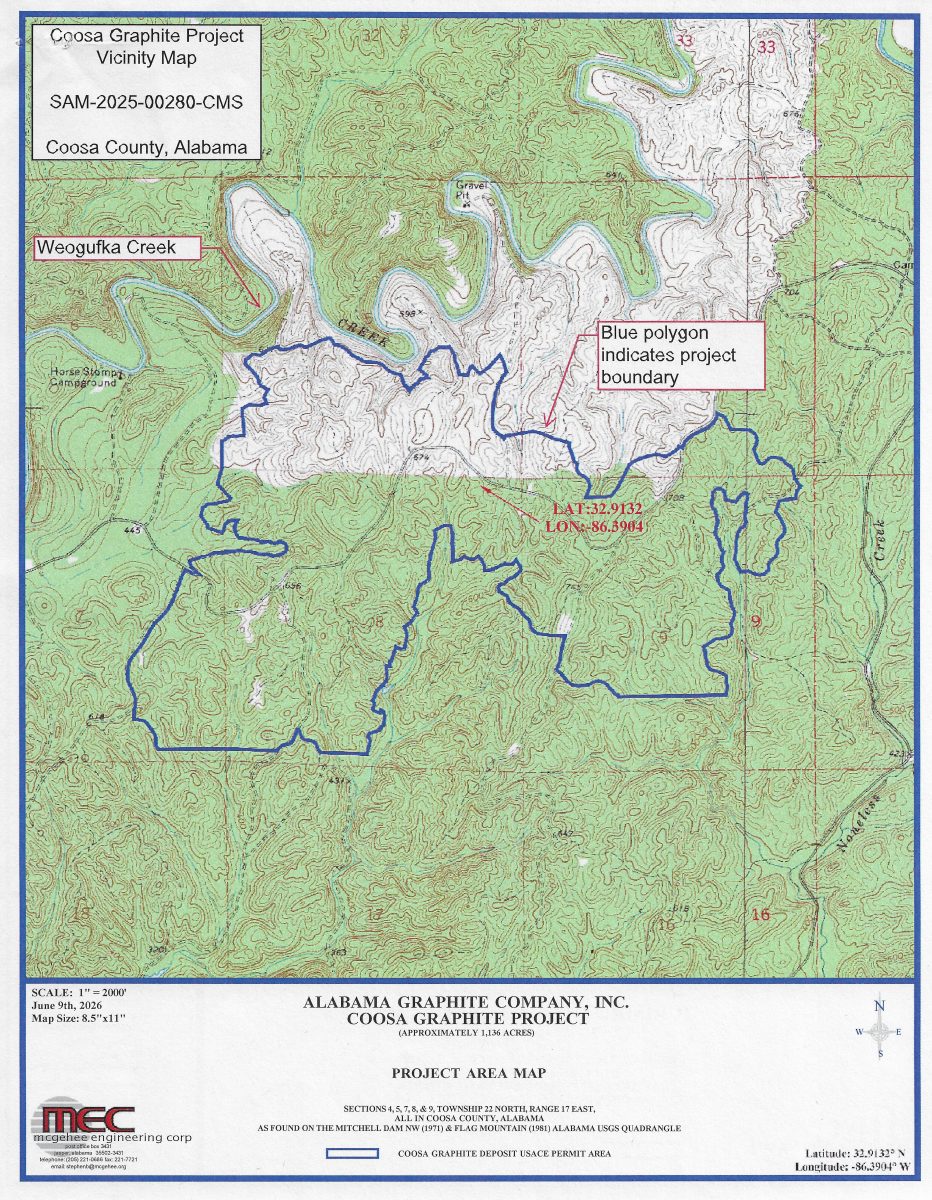
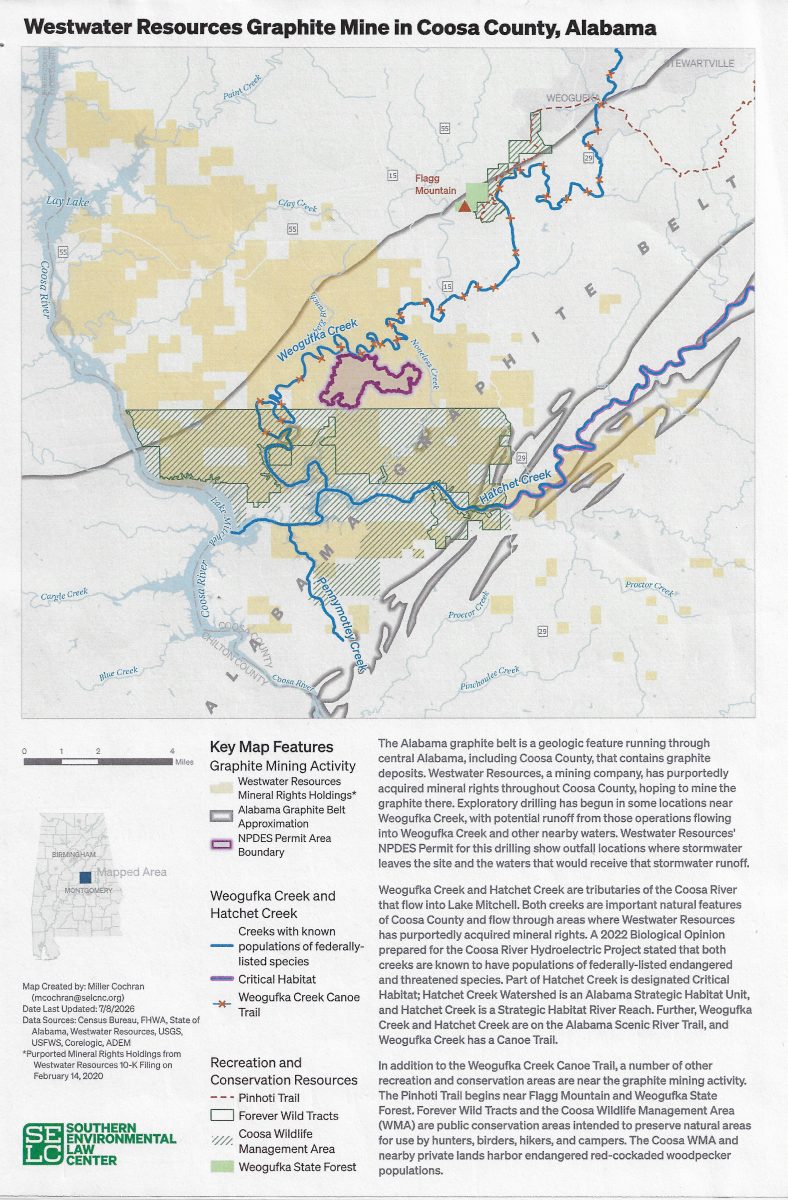
The public notice states that the proposed activity would affect waters associated with Weogufka Creek. The specific project area related to the permit application is a 1,136-acre parcel of land bisected by Coosa County Road 15 in unincorporated Coosa County, located 10 miles west of Rockford.
Regarding the proposed activity, the public notice reads, “The applicant is requesting a Department of the Army permit to discharge fill material into 23,824 linear feet of intermittent streams and 3.54 acres of wetlands for surface mining to extract graphite mineral within a 1,136-acre parcel of land. The impacts include mining and construction of sediment basin impoundments associated with the proposed surface mining operations.”
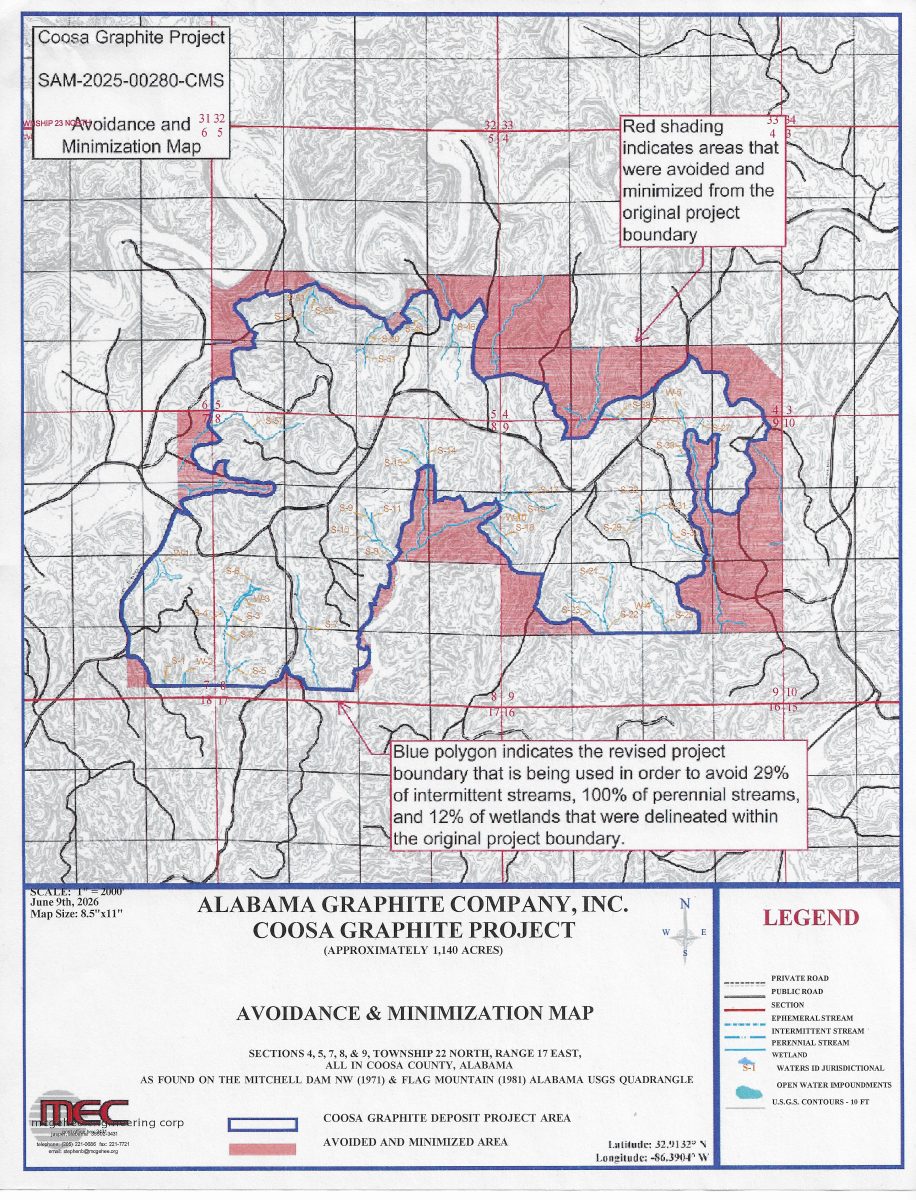
The joint public notice from ADEM and USACE states that Westwater Resources was able to “redesign and situate the project to avoid and minimize impacts to aquatic resources, including avoiding 29% of intermittent streams, 100% of perennial streams and 12% of wetlands that were identified during the aquatic resource delineaton within the project boundary.”
The ADEM and USACE notice states that the decision whether to issue a permit will be based on “an evaluation of the probable impact, including cumulative impacts of the proposed activity on the public interest.”
The notice further reads, “That decision will reflect the national concern for both protection and utilization of important resources. The benefits, which reasonably may be expected to accrue from the proposal, must be balanced against its reasonably foreseeable detriments.
“All factors which may be relevant to the proposal will be considered, including cumulative impacts thereof; among these are conservation, economics, aesthetics, general environmental concerns, wetlands, historical properties, fish and wildlife values, flood hazards, floodplain values, land use, navigation, shoreline erosion and accretion, recreation, water supply and conservation, water quality, energy needs, safety, food and fiber production, mineral needs, considerations of property ownership, and in general, the needs and welfare of the people.”
The Corps of Engineers is soliciting comments from the public, including federal, state and local agencies and officials, tribal nations and other interested parties in order to consider and evaluate the impacts of Westwater’s proposed activity.
According to the public notice, “Any comments received will be considered by the USACE to determine whether to issue, modify, condition, or deny a permit for this proposed activity.”
Comments are also used in the preparation of an environmental assessment or an Environmental Impact Statement, or both. They are also used to determine the need for a public hearing and to determine the overall public interest of the proposed activity.
Written comments on Westwater’s proposed activity will be received until July 26. USACE requests that comments be submitted electronically via the Regulatory Request System at rrs.usace.army.mil/rrs/public-notices.
Alternatively, those interested may submit comments to Samantha Rhoades via email to samantha.n.rhoades@usace.army.mil; or via mail to U.S. Army Corps of Engineers, Mobile District; Attention: Samantha Rhoades; 600 Vestavia Parkway, Suite 203; Vestavia Hills, AL 35216.
Those submitting public comments are asked to refer to “SAM-2025-00280-CMS” in their comments.
While some have expressed that they have no qualms about the graphite mine or associated activity in Coosa County, with some citing progress or job creation as positives, others are concerned about the potential environmental impacts, particularly relating to waters, forests and noise pollution for the area.
Coosa Riverkeeper is one conservation group that has voiced concerns about protecting the “water, woods and way of life” for the area, stating that Westwater’s open-pit mine “will harm Coosa County and its residents.”
The graphite at the proposed project site is in soft near-surface rock, making it ideal for open-pit mining.
Westwater Resources itself has stated in previous press releases that the rock is “well suited to open-pit mining.”
According to the Permitting Dashboard, the project information for the Coosa Graphite Project submitted by Westwater Resources includes that “The Coosa Graphite Deposit will be developed as a conventional open pit mining operation consisting of multiple shallow pits, generally less than 100 feet deep. Mining will utilize standard drill and blast methods, excavators and haul trucks. …Mining will occur within a defined project footprint that includes open pits, waste rock storage area and filtered dry tailings storage facilities, an on site concentrator plant, access roads, water management features, and supporting infrastructure.”
Because of concerns for the potential impact to the area, Coosa Riverkeeper is hosting a public Graphite Mine Community Meeting on Monday, July 20, from 8 to 9:30 a.m. at the E-911 building in Rockford, with free breakfast provided.
The group has mentioned having pollution concerns associated with the graphite mining, including water pollution and acid mine drainage; noise and air pollution; impact to land, wildlife and wetlands; and roads.
The purpose of the community meeting is to “educate and empower community members” about Westwater’s proposed graphite mine. Coosa Riverkeeper is also encouraging area residents and interested parties to submit a comment letter explaining concerns about the mine, to ask for a public hearing and to ask for an extension of the comment period.
Justinn Overton with Coosa Riverkeeper stated that no representatives from Westwater will be present at Monday’s meeting, stating that the meeting is “intended to explain the permitting process and about the impacts to the community.”
In addition to attending Monday morning’s meeting, those wishing to learn more about the mining process and Coosa Riverkeeper’s concerns can visit CoosaRiver.org/Graphite or join the Facebook group at www.facebook.com/groups/coosagraphitemine.
See additional maps and graphics at www.thecoosacountynews.com.