
Central High School SGA member Chris Prowell interviews county commissioner candidates
PROTECTED CONTENT
If you’re a current subscriber, log in below. If you would like to subscribe, please click the subscribe tab above.
Username and Password Help
Please enter your email and we will send you a password reset link.
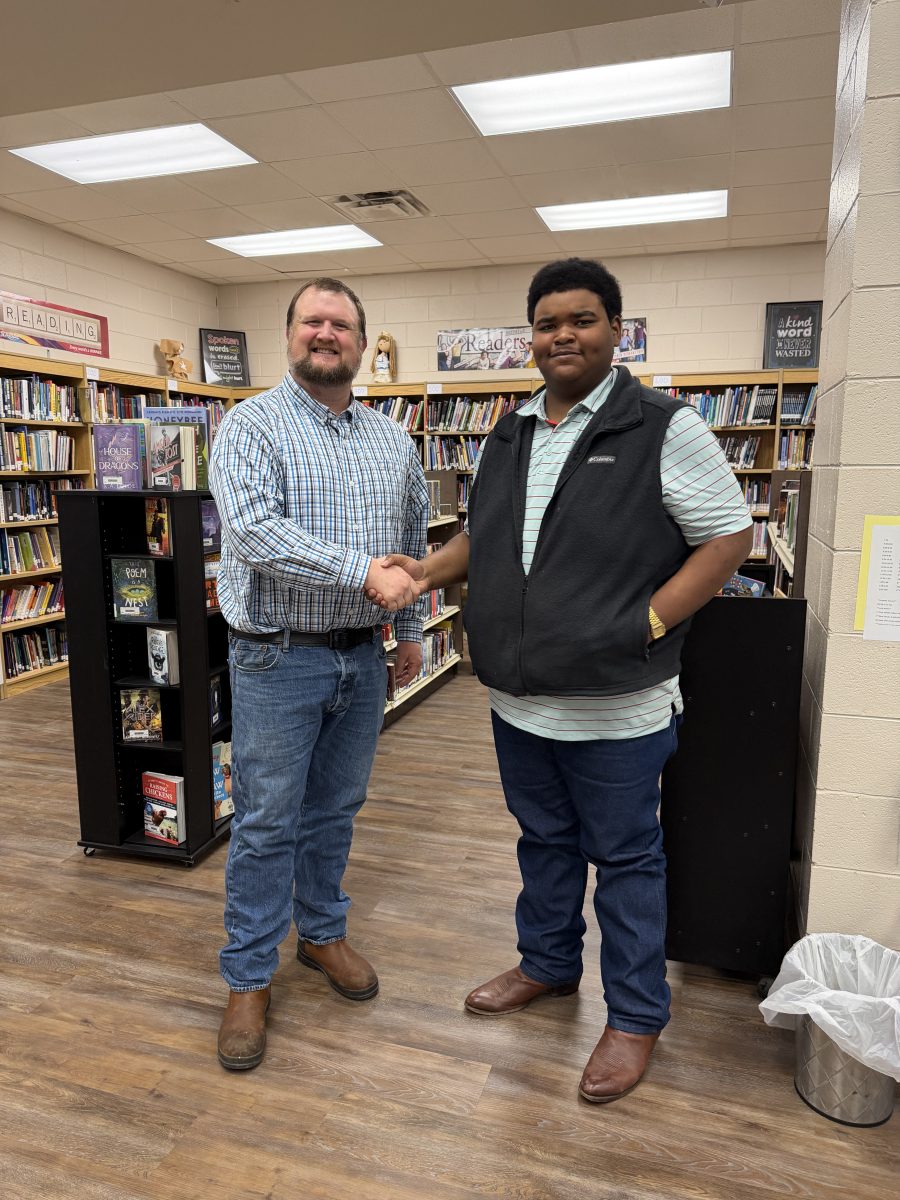
SGA member Christopher Prowell, right, with Matthew Reams, candidate for County Commission District 4. Photo submitted
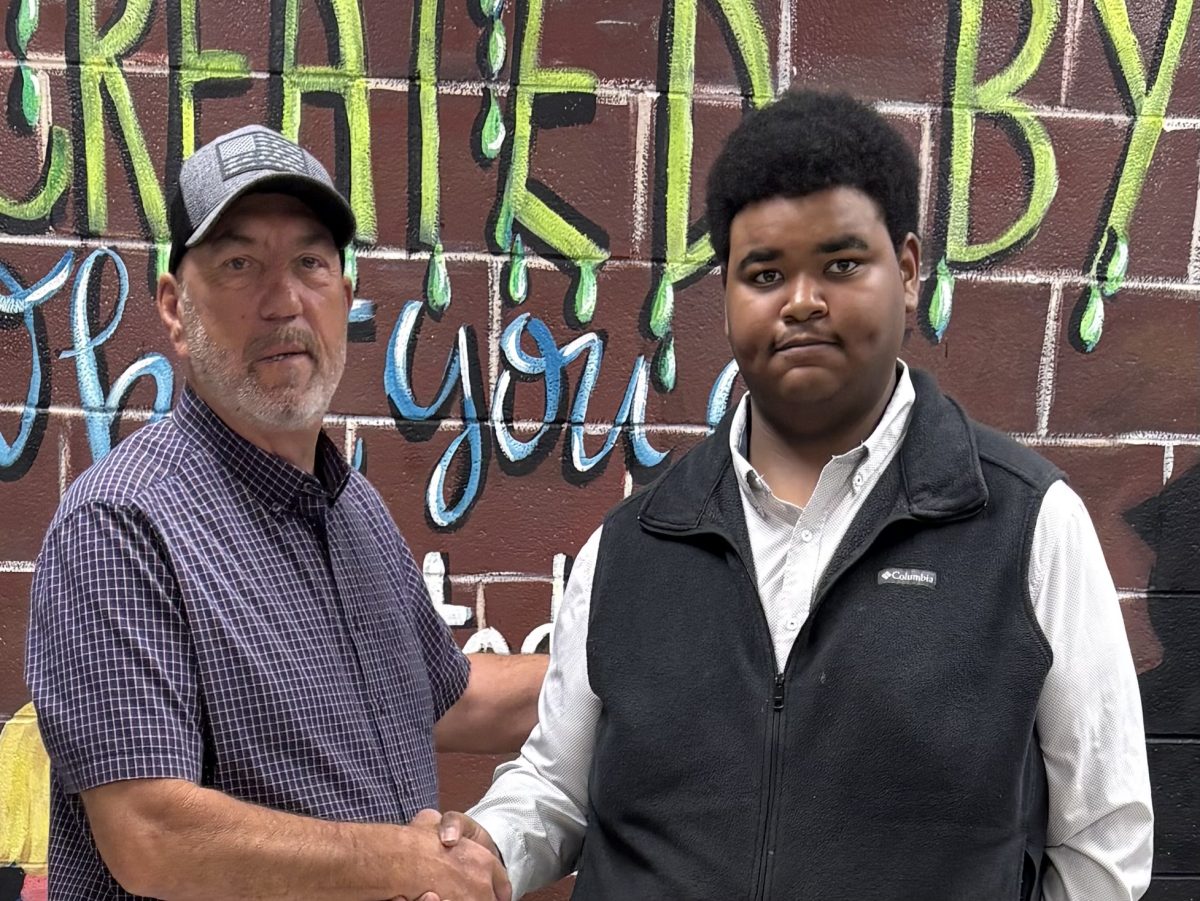
District 4 County Commission candidate Johnnie Schmidt, left, with Central High School SGA member Christopher Prowell. Photo submitted
By Christopher Prowell
Matthew Reams, candidate for District 4 county commissioner, recently sat down for an interview where he outlined his views on the future of Coosa County with a focus on priorities, services and long-term planning for our rural community.
Reams said one of the biggest challenges facing rural counties is a limited tax base driven by a lack of industry. He noted that while growth is needed to sustain services, it must be balanced with preserving the rural character our residents value.
“The biggest issue we have is a lack of funds,” Reams said. “We don’t have a strong industrial base, so we don’t have a large tax base to work with. At the same time, we don’t necessarily want to lose the rural way of life.”
He emphasized the importance of long-term planning rather than operating strictly year to year, saying a healthy county should have a balanced budget, a clear direction for development and better use of existing resources, including tourism potential.
On state representation, Reams said rural counties must be proactive in advocating for themselves.
“We have to be willing to have conversations with state leaders and make sure our citizens are treated fairly when resources are distributed,” he said.
Regarding the budget and services, Reams said prioritizing essential services is key when working within a limited budget. He identified public safety; including law enforcement, Emergency Medical Services (EMS) and volunteer fire departments; as top priorities.
Reams said he strongly supports volunteer fire departments and EMS, noting that he has assisted with local fundraising efforts.
He also praised improvements in EMS response times in recent years and said maintaining those gains is essential.
“Those are services we cannot afford to cut,” he said. “We have to make sure they are funded and supported.”
Reams added that the county has made progress in emergency medical services and broadband access, but must continue improving both.
He noted that broadband expansion has already improved opportunities for many residents and said continued partnerships with utility providers could help reach the remaining underserved areas.
He added that infrastructure improvements, particularly roads, must be prioritized based on need, with clear communication to residents about project timelines.
In regards to economic development, Reams expressed strong support for small businesses and agriculture, calling them the backbone of the local economy. He also said he supports responsible industrial development when it aligns with the county’s character.
“I want to see small businesses succeed here,” he said. “At the same time, if a company brings good jobs and fits our county, I’m open to that kind of growth.”
He said keeping young people in the county depends largely on job opportunities and trades education.
Regarding land use, Reams said he supports limited government involvement and minimal zoning restrictions.
“I believe in letting landowners have as much freedom as possible,” he said, adding that development should be guided carefully along existing highway corridors to avoid disrupting rural communities.
Reams also emphasized the importance of transparency in county government, saying decisions should be made openly and in the public interest.
“There should not be backroom deals,” he said. “People deserve to know what’s happening and why.”
He added that disagreements among officials should be handled through communication and compromise to maintain public trust.
In closing, Reams said he is motivated by a commitment to public service and the belief that local government should reflect the will of the people.
“I would be honored to serve as District 4 commissioner,” he said. “My goal is to represent the citizens and work for the best interest of the county.”
Powell also sat down with Johnnie Schmidt, also a candidate for District 4 county commissioner, where he outlined his views on the future of Coosa County with a focus on priorities, services and long-term planning for our rural community.
Schmidt began by sharing his personal background, stating that he is a Rockford native. Although he was born in Dallas, Texas, he moved to Coosa County as a child and has lived here for most of his life. He noted that aside from a few years after high school and time spent living in Texas with his father, he has remained a lifelong resident of the county.
He also referenced his 31-year career working in the utility sector, where he gained experience serving both public and private customers across a large region including Coosa and surrounding counties.
Schmidt said one of the biggest challenges facing rural counties over the next decade is the lack of a strong tax base. He explained that limited income and population size make it difficult to fund infrastructure and essential services, forcing local governments to carefully prioritize spending.
He said county leaders must make difficult decisions about where limited resources can be used most effectively, noting that some projects will be completed while others may have to be delayed because of funding constraints.
When asked about ensuring rural communities are heard at the state level, Schmidt reflected on how Coosa County communities once had their own schools and identities, but have since been consolidated. He said smaller communities can feel overlooked, but working together as a County Commission helps ensure their concerns are represented in Montgomery.
Schmidt said a healthy rural county is one where residents are satisfied with their quality of life, want to stay and feel that improvements are being made over time. He said reducing complaints about basic services like roads, drainage and maintenance would be a sign of progress.
On budgeting, he said efficiency is essential. He explained that county leaders must constantly evaluate spending, eliminate unnecessary costs and shift resources where they are most needed to maintain a balanced budget.
Regarding broadband and internet access, Schmidt said rural expansion efforts are ongoing through partnerships with electric cooperatives and utility providers. He noted that cooperation between agencies is key to improving access in underserved areas.
On agriculture and land use, Schmidt said forestry is the primary agricultural industry in Coosa County. He said timber plays an important role in the local economy, but noted that the county must continue to evaluate how land is taxed and managed to ensure a fair system for all property owners.
He also addressed large scale land purchases by outside developers and corporations, stating that he does not support excessive consolidation of land ownership. He said such purchases can drive up property values and reduce local control, though he acknowledged that landowners have the right to sell their property.
On economic development, Schmidt said growth should be focused near existing highways and infrastructure to preserve rural areas. He said Coosa County can support development while still maintaining its natural character and peaceful environment.
He said he supports minimal regulation where possible, but emphasized that safety standards and building requirements must still be enforced to protect the public.
In discussing emergency services, Schmidt highlighted the importance of volunteer fire departments in rural communities. He said state-supported funding programs help keep these departments operational and stressed the need to maintain recruitment and training.
He also suggested that future planning should include more community storm shelters and improved disaster preparedness, especially in coordination with schools and emergency management agencies.
On economic development and jobs, Schmidt said grocery stores, hardware stores, gas stations, and small retail businesses are realistic and needed in rural areas like Rockford. He said residents currently travel long distances for basic services, and local development could improve quality of life.
He emphasized the importance of supporting small businesses, stating that money spent locally helps strengthen the county’s economy.
When discussing workforce retention, Schmidt acknowledged that many young people leave Coosa County for work opportunities elsewhere. He said expanding housing options, encouraging entrepreneurship and attracting new businesses are key strategies to help keep younger residents in the area.
On transparency and public communication, he said residents can be kept informed through newspapers, public meetings and social media. He added that commissioners should make themselves available to the public and remain accessible to the communities they represent.
Schmidt said handling disagreements requires professionalism and the ability to work through differences calmly while keeping the best interests of the county in mind.
He said one strength of the county is that local boards and departments; including the school system, Commission, Highway Department, and Sheriff’s Office; generally work well together. He said maintaining that cooperation is important for continued progress.
When asked what the county needs to change immediately, Schmidt said he did not identify any single urgent issue, but emphasized the importance of continuing positive momentum and maintaining stability.
In closing, Schmidt said he believes voters should trust him based on his honesty, long career experience and knowledge of the region. He said his work across multiple counties has given him a broad understanding of rural needs and public service.
