Be prepared for life, disasters
PROTECTED CONTENT
If you’re a current subscriber, log in below. If you would like to subscribe, please click the subscribe tab above.
Username and Password Help
Please enter your email and we will send you a password reset link.

Food for Thought
Judge of Probate Richard Dean
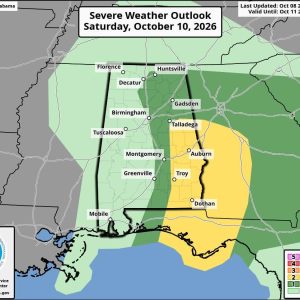
Recently, thank God, we were mostly spared the extremely bad weather that was predicted for our area. In Coosa County and across Alabama, we received some damage, but nothing compared to what could have been. The strength of the storm diminished partially due to the heavy rains that took energy out of the storm as it moved across the states.
Some areas of the country had extreme flooding, and others suffered severe damage. According to most reports, there were 42 lives lost, truly a travesty. My thoughts and prayers to all who lost family members and all who suffered storm damage.
I take this as a wake-up call. We all need to be better prepared for whatever comes our way. Preparation has been the focus of my last two columns. Although the focus was on getting our personal affairs in order, this column focuses on preparing for life.
Looking on Facebook and other social media sites, I saw many people complaining that the government or others needed to do more to prepare people or to take care of people. Granted, the government does have some obligation for our safety. However, that obligation does not rest solely on the government or on others.
We all have a responsibility to do our parts to prepare for disaster and take care of ourselves. I saw and listened to many complaints about the lack of preparation by the county, the elected officials (mainly commissioners), the highway department, the volunteer fire departments, and even our churches. What I didn’t see or hear was anyone saying, “I should have done more to be better prepared to take care of myself and/or my family.”
Many argued the county should provide storm shelters for their areas. Storm shelters would be beneficial, when they are needed. I would love to have a public shelter in Equality. So would the people in Stewartville, Hanover, Weogufka, Cottage Grove, Marble Valley, Richville, Goodwater, Kellyton, Rockford, Hissop, Nixburg, Mt. Moriah, Ray, and other Coosa County communities. The county cannot fund shelters for all these areas. There may be a few grants available, but nothing significant for sparsely populated areas like Coosa County.
According to Homeguide.com, Angi and others; storm shelters can range from $4,000 to more than $80,000 depending upon above ground or underground, material and capacity. According to EMA Director Sheldon Hutcherson (who works around the clock during our storms), there are tax credits available for anyone installing a home storm shelter that meets established standards; however, he knows of no grant programs available to assist with funding a storm shelter.
An example of the standards for design and construction can be found in the Federal Emergency Management Agency (FEMA) 1998 publication “Taking Shelter from the Storm – Building a Safe Room for Your Home or Small Business.” This is an excellent publication. However, these standards were modified in 2008 and again in 2014 by the International Code Council and the National Storm Shelter Association.
In addition, if metal is used in construction the shelter must also meet the American Society for Testing and Materials standards. To obtain the tax credit, all shelters must be certified as meeting all established and applicable standards.
Following is a very general chart for personal, prefabricated, home storm shelters:
| Capacity (of people) | Average cost installed |
| 2 | $2,800 – $4,500 |
| 4 | $3,500 – $7,000 |
| 6 | $3,800 – $7,800 |
| 8 | $4,500 – $8,500 |
| 10 | $5,000 – $9,000 |
| 12 | $5,500 – $15,000 |
| 14 | $7,000 – $18,000 |
| 16+ | $7,500 – $20,000+ |
Because it would be seldom used, many people believe the expense of a storm shelter for their homes does not warrant the expense. That same logic applies to the county budget.
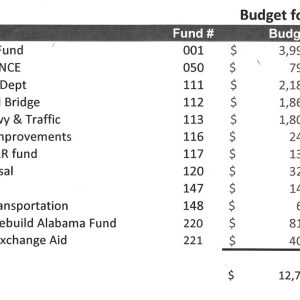
When the County Commission is working the county budget, they must decide where to spend their limited discretionary resources. Most often, they look at what must be done and weigh against what they would like to do. The “must be done” items normally win.
Moving on to another area, our organizations with volunteer fire department (VFD) in their title. I heard/saw some saying/posting: The VFDs should provide storm shelters. The VFDs should be prepared to provide food after a disaster. The VFDs need to open before and during the storm (some do) because their facility should be better than a mobile home.
However, when asked who will volunteer to be there to open, monitor and staff the facility in case the volunteer firefighters are called out on an emergency (e.g. fire, clearing roads, medical, auto accident), it is like the sound of crickets following a sudden loud noise – an overwhelming sound of silence.
Furthermore, until 2022, if a VFD opened its doors during a storm, the VFD could have been held liable if anyone allowed into or on the premises of the facility was injured.
In 2021, Senate Bill 43 was passed and signed on April 7, 2021, by the governor as Act 2021-165. The Act required the processes and procedures for application, as well as the standards, for the facility be established by December 31, 2021. This legislation offers individuals and entities that own structures to apply for the designation of a “Safer Place Facility” if they so desire.
Act 2021-165, Section 1, Paragraph 5 reads, “Provide that a designated safer place facility is not required to be available to the public at all times or to provide staff, food, water, medicine, electricity, air conditioning, first aid, telecommunication services, or any other life or health preserving goods or services before, during, or after a severe weather event.”
In addition, Act 2021-165 states people using the facility do so at their own risk and provides protection for individuals who own the facilities. It also provides liability protection for anyone working (volunteer, owner, or employee) at the facility. Finally, the Act specifically prohibits any state or local government providing funds or compensation of any kind to any person or for the facility.
Today we have the best communications and weather forecasting in history. With no warnings, on March 21, 1932, Alabama had severe storms that plowed through many communities. For perspective, go to “www.weather.gov/bmx/event_03211932” or simply search for “Worst Storm in Alabama History.”
Bottom line: We all need to be prepared for life and the disasters that come with it. We can’t depend on others to prepare for us. Until next month; stay safe, prepare, and God bless.