Special to the News
As ninth graders studied their section on European exploration in China during the 1600-1700s they learned that the Chinese generally wanted to be self-sufficient and isolate themselves from the Europeans.
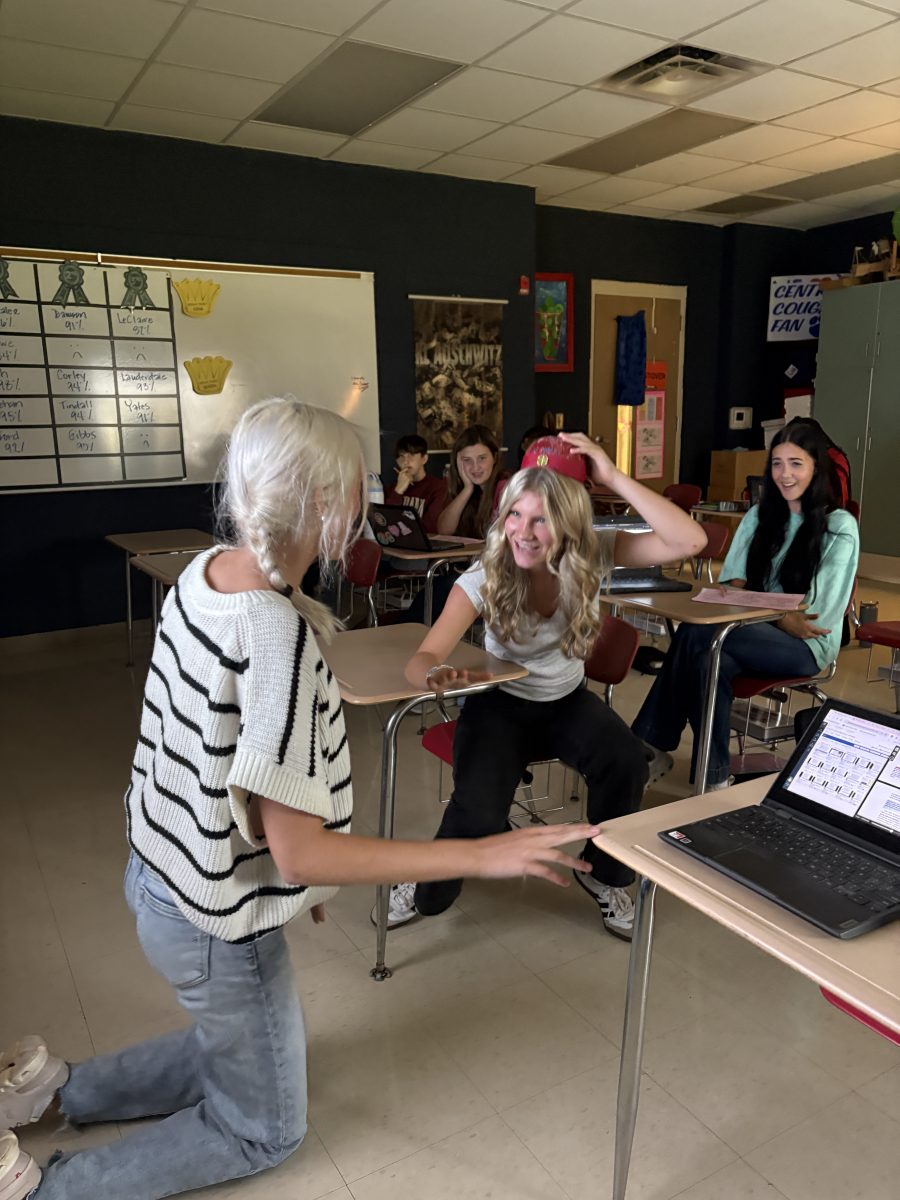
However, the Qing emperors did allow the Dutch to trade with China because they agreed to pay tribute, which was money given to the Qing emperor to protect their ability to trade in China. In addition, the Dutch also agreed to kowtow, which was the practice of bowing to the floor nine times in front of the emperor as a sign of submission.
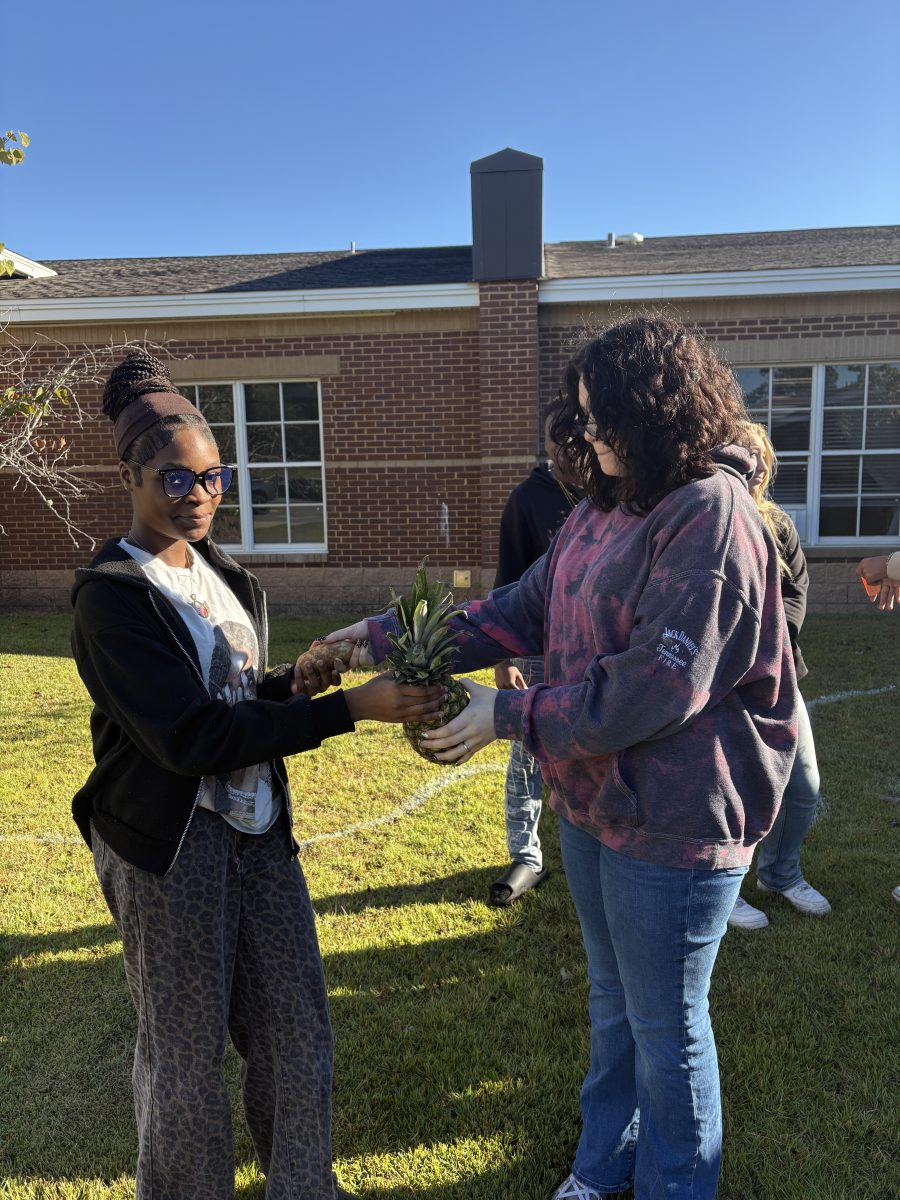
Pictured are Harper Self, who is playing the role of the Dutch trader kow towing to Lily Howell, who is playing the role of the Qing emperor, wearing the traditional hat and hair pigtail called a queue.
As the students completed their section on European colonization of the Americas, they took their lesson outside to simulate the Columbian Exchange. The Columbian Exchange was the global transfer of food, plants, animals, and diseases between the western and eastern hemispheres as a result of Columbus bringing the first European settlers to the Americas.
Each student was in charge of a different food, plant, or animal to cut out as part of the exchange. Once outside the students found the continents painted on the lawn. They had to correctly place themselves in the hemisphere in which their item originated.
Once the exchange started students had to determine if they remained stationary or if they moved across the Atlantic Ocean, dependent on if their item was brought by the Europeans or transferred by the Europeans. Students were challenged to bring the real item to make the exchange more realistic.
Pictured are Artina Coplin and Serenity Medellin who brought pineapple and potatoes for the Columbian Exchange.
The activity also introduced students to foods they were unfamiliar with previously. Studies show simulation activities such as these help students remember information long term.