As students completed their section on European colonization of the Americas, they took their lesson outside to simulate the Columbian Exchange.
The Columbian Exchange was the global transfer of food, plants, animals, and diseases between the western and eastern hemispheres as a result of Columbus bringing the first European settlers to the Americas.
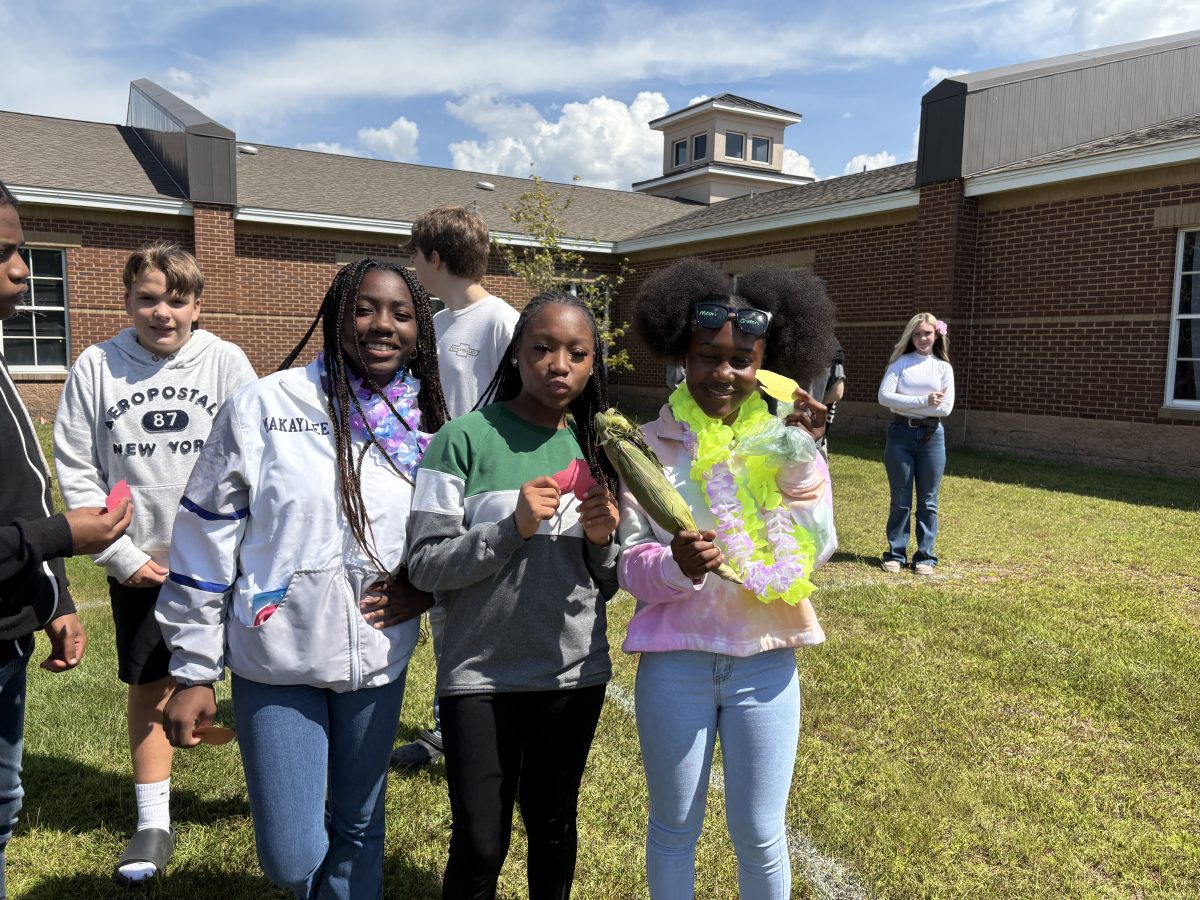
Each student was in charge of a different food, plant, or animal to cut out as part of the exchange. Once outside the students found the continents painted on the lawn. They had to correctly place themselves in the hemisphere in which their item originated.
Once the exchange started students had to determine if they remained stationary or if they moved across the Atlantic Ocean depending if their item was brought by the Europeans or transferred by the Europeans.
Students were challenged to bring the real item to make the exchange more realistic. Pictured is Kamiya Davis who brought corn for the Columbian Exchange.
The activity also introduced students to foods they were unfamiliar with previously. Studies show simulation activities such as these help students remember information long term.