All politics is local
PROTECTED CONTENT
If you’re a current subscriber, log in below. If you would like to subscribe, please click the subscribe tab above.
Username and Password Help
Please enter your email and we will send you a password reset link.

Bridging the Divide
Chuck Bradley
For decades we have accepted the philosophy that All Politics is Local, but in today’s electronic world and instant communication; the question is, what is local?
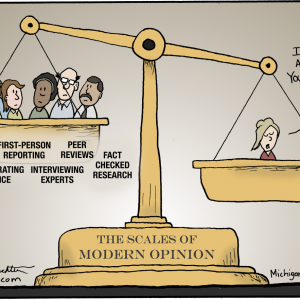
Voters today are more likely to trust the information that comes from social media sites as they are to trust information from national news organizations, according to a recent Pew Research Center survey. The same pattern appears among young adults or soon-to-be voters.
Today, 37% of Republicans and Republican-leaning independents say they have a lot of or some trust in the information that comes from social media sites. This is nearly on par with the 40% of Republicans who express this level of trust in national news organizations. Their trust in national news outlets is now 30 percentage points lower than it was a decade ago.
A much larger share of Republicans (66%) expresses some trust in information from local news organizations.
Among Democrats and Democratic-leaning independents, by comparison, 38% have at least some trust in the information that comes from social media sites. This is far below the share of Democrats who express this level of trust in information from national (78%) and local (83%) news organizations.
The share of Republicans who trust information from social media sites has increased notably in the last four years, when just 19% trusted this type of information. Republicans have generally become less trusting of national and local news organizations in recent years. Democrats’ views have remained more consistent over time.
Across most age groups, Americans remain far less likely to trust information from social media sites than from national and local news organizations. But the youngest adults are an exception.
Adults under 30 are now nearly as likely to have a lot of or some trust in the information that comes from social media sites (52%) as from national news organizations (56%). More young adults (71%) express trust in information from local news outlets.
For all other age groups, trust in information from social media sites remains lower than trust in both local and national news organizations. The gap is especially large among the oldest Americans. Just 22% of those ages 65 and older say they have at least some trusts in information from social media, compared with 61% who trust national news organizations and 78% who trust local news outlets.
If partisanship was the only factor in Americans’ views toward national news organizations, one would expect young people to be more trusting, because young adults are more likely to be Democrats. But while there are few age differences in these views among Republicans, young Democrats are less likely than older Democrats to express trust in national news outlets.
Regardless of age group, approximately four-in-ten Republicans have a lot of or some trust in information from national news organizations. Democrats ages 50 and older, however, are much more likely than those under 30 to have at least some trust in national news outlets (86% vs. 69%).
Democrats ages 50 and older are also more likely than those under 30 to express trust in local news outlets (90% vs. 77%).
Conversely, younger adults – including both Democrats and Republicans – the next generation of voters, are more trusting than older adults of information from social media.
Social media platforms have undeniably reshaped the landscape of political engagement and geopolitical discourse. Their ability to disseminate information rapidly, foster viral movements and create echo chambers make them powerful tools for political campaigns.
There is no doubt these platforms will continue to evolve. In future elections, the challenge will be finding ways to harness their potential for positive political engagement while mitigating the risks associated with their use, while trying to keep “All Politics Local.”
Until next week, please send your questions or comments to bradleychuck92@gmail.com.