
Alabama mussel nominated for Mollusc of the Year
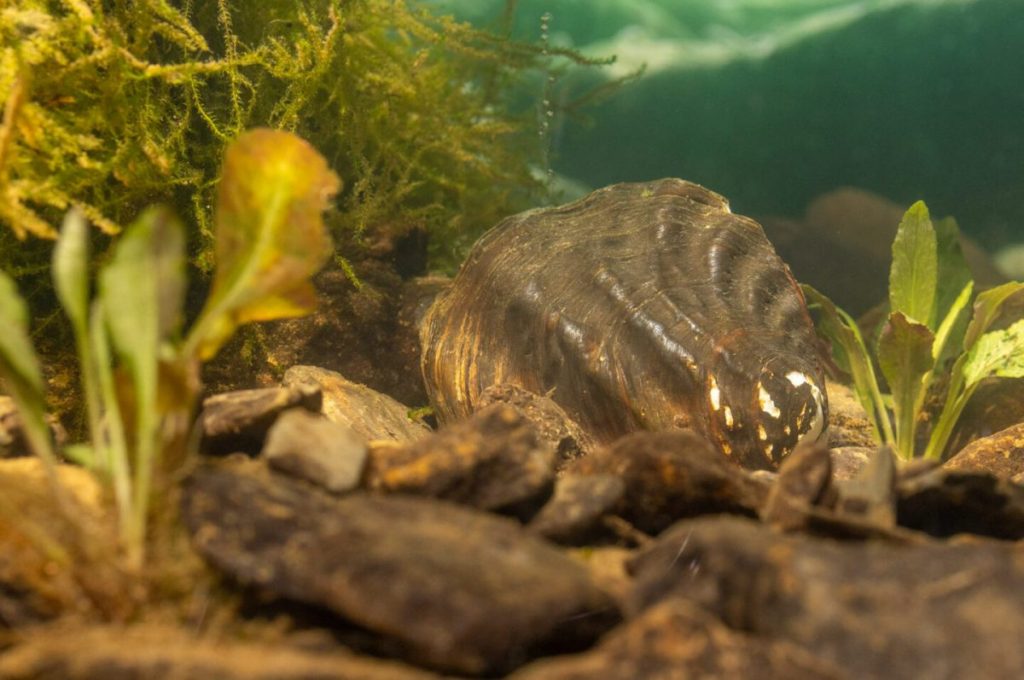
Amblema elliotti, also called the Coosa Fiveridge, is a freshwater at-risk mussel primarily endemic to the Coosa River Basin that is a finalist in the International Mollusc of the Year competition. Photo submitted
By Christa Jennings
Senior staff writer
An at-risk mussel species endemic to Alabama, and mostly found in the Coosa River Basin, has been nominated for International Mollusc of the Year 2024, with genome sequencing at stake as a prize for the winning mollusc.
Dr. Carla Atkinson, associate professor with the Department of Biological Sciences at the University of Alabama, and Jamie Bucholz, a doctor of philosophy student at the University of Alabama, nominated Amblema elliotti, also called the Coosa Fiveridge.
This is the first time a freshwater mussel has been entered into the international competition, and Atkinson said that it would be a “huge genomic resource” to have a whole genome sequenced for the species for free. Additionally, the Amblema genus is thought to be extirpated, or eradicated, from the Black Warrior River, and genomic data could help facilitate its propagation and subsequent re-establishment in the Black Warrior.
There are five finalists in the 2024 International Mollusc of the Year competition, which is done by popular vote. The winning mollusc will receive complete genome sequencing and annotation, which is equivalent to a $40,000 grant.
The Coosa Fiveridge is primarily endemic to the Coosa River Basin, which covers a large chunk of Coosa County. From its headwaters in Georgia and Tennessee, the Coosa River flows to Alabama, creating lakes surrounding Coosa County, and eventually joins the Tallapoosa River south of Wetumpka to form the Alabama River.
While the Coosa River Basin used to be especially diverse, it is said that extensive damming in the system represents “the single largest extinction event in North America,” including the loss of 15 freshwater mussel species.
However, in the remaining habitat, Amblema elliottii occurs in large creeks to rivers with slow to strong currents, and it can be found in sand, gravel and cobble substrates.
The Coosa Fiveridge essentially looks like a rock, but with ridges on its shell, which have been described as being “reminiscent of waves in the river current in which it resides.” They are often light to dark brown, sometimes with algae growing on the shell, and their three to five ridges deepen with age. The maximum recorded age of Amblema mussels is 79 years.
Scientific experts reviewed all nominations and selected the five finalists, including the Coosa Fiveridge, based on multiple factors, including diverse representation of mollusc groups and geographic origins, the scientific feasibility of genome sequencing and public appeal. The finalists are then announced for an open public vote, with the last two years receiving more than 35,000 votes from people in more than 100 countries.
Voting for the International Mollusc of the Year began March 13 and ends on April 14, with individuals able to vote only once in the competition. Individuals can vote in the competition at https://moty2024.senckenberg.science/en, and results will be announced on April 18. (Or click here to vote in the competition.)
Dr. Atkinson and Bucholz hope to see the Coosa Fiveridge win the competition as the genome of Amblema elliotti will help them understand how the species has been impacted by the changes in the Coosa River Basin and allow them to compare the species to others in the same genus.
Atkinson stated that to date whole genome resources for freshwater mussel species are “sorely lacking,” noting that mussels are some of the most “at risk of extinction” species.
“They have faced enigmatic declines, with some rivers now a species-poor relic of what they once were,” Atkinson stated. “Sequencing the genome of this ‘handsome rock’ will help preserve its unique genetic lineage in perpetuity.”
In providing information on the species and its place in the competition, Atkinson said that obtaining a whole genome for a freshwater mussel is similar to “walking on the moon for the first time.”
“It’s a huge leap forward in what we already know about these species and what we will come to learn about these unique, at-risk taxa,” she said.
The International Mollusc of the Year competition was started in 2021 by the LOEWE Centre for Translational Biodiversity Genomics and Senckenberg, together with Unitas Malacologica, the world mollusc society.
The primary objective of the competition is to increase awareness of the vast diversity of molluscs and the importance of their protection, as well as to “celebrate their remarkable characteristics and inspire fascination for molluscs worldwide.”
Molluscs include snails and slugs, mussels and clams, octopus and squid, as well as tusk shells or scaphopods, chitons, monoplacophorans, and worm-molluscs.

The Coosa River Basin
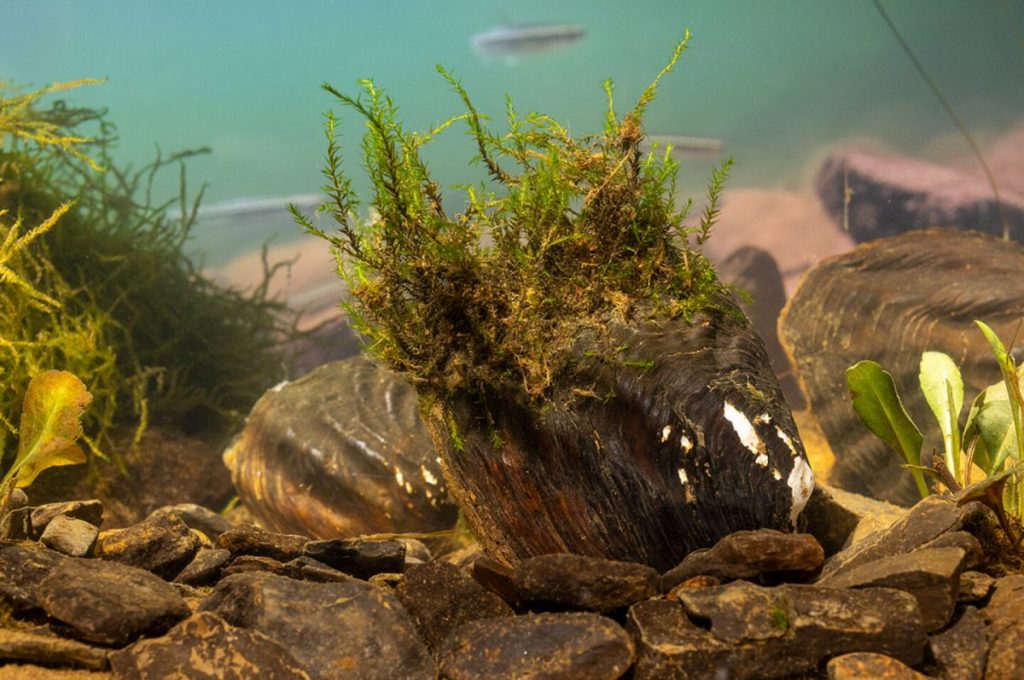
The Coosa Fiveridge


Go Coosa Fiveridge! Just voted!
Thank you!